

How Kino Rebuilt Its Packaging Standards to Protect Stainless Steel Kitchens in Global Shipping
In the global kitchen industry, product quality does not end at manufacturing. For international projects, especially those involving long distance sea and land transportation, packaging becomes part of the product itself.
A well-designed kitchen can still fail if it arrives damaged. Conversely, responsible packaging reflects a manufacturer’s understanding of risk, accountability, and respect for the client’s investment.
At Kino, we believe that packaging is not an accessory to production. It is a critical engineering decision. This belief was not formed overnight. It was shaped by real projects, real losses, and honest reflection.
This article explains how Kino learned from past packaging failures, took full responsibility without shifting blame, and rebuilt a packaging system designed to protect stainless steel kitchen products under real world logistics conditions.
Learning From Mistakes
When Packaging Was Not Enough
No manufacturer improves without facing uncomfortable truths. In Kino’s history of international projects, two orders in particular became turning points in how we approach packaging today.
Case One
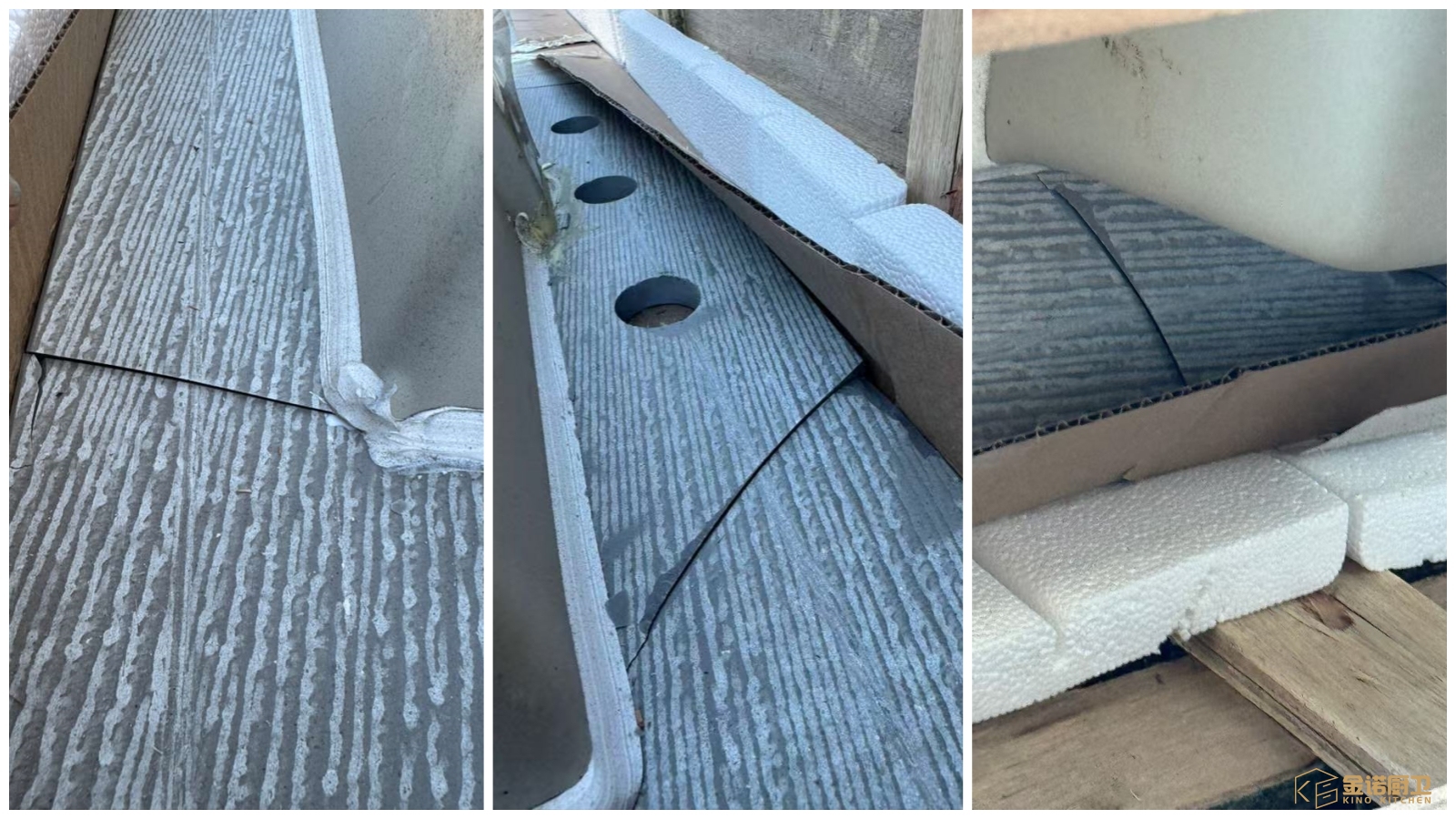
A Shipment to Australia and a Broken Countertop
In an earlier project shipped to Australia, the kitchen products were manufactured to specification and passed internal quality inspection before leaving the factory. However, during long distance transportation, the shipment encountered severe handling stress.
When the cargo arrived, the countertop had fractured.
The damage was real, visible, and unacceptable.
This was not a case of material failure in daily use. It was a failure in packaging design under extreme logistics conditions.
We did not attribute the problem to logistics companies, ports, or uncontrollable external factors. The truth was clear: the packaging did not provide sufficient structural protection for that shipment.
That responsibility belonged to us.
Case Two
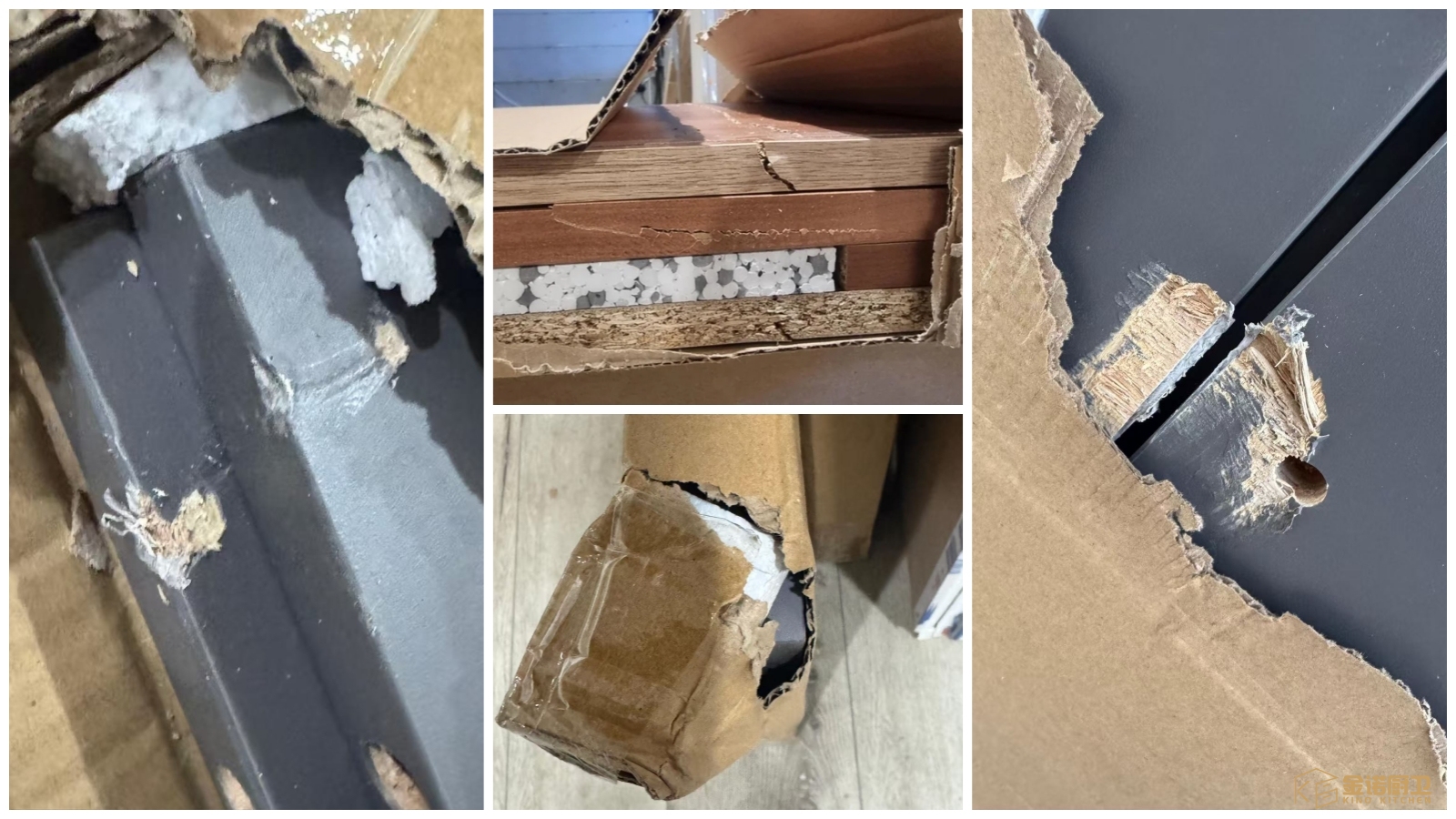
A Shipment to the Philippines Without Wooden Crating
In another order shipped to the Philippines, the products were packed using a shared cabinet packing method. The shipment did not include a full external wooden crate.
During transportation and handling, multiple impacts occurred. The result was visible surface damage and corner deformation on several units.
Again, the conclusion was direct.
The packaging solution chosen was not adequate for the transportation environment.
These two cases were not hidden or ignored. Internally, they became reference points for change.
Why We Do Not Shift Blame
In international trade, it is common to hear explanations such as
“Logistics was too rough”
“The port handling caused it”
“This is unavoidable in shipping”
At Kino, we do not accept these explanations as conclusions.
Global shipping is, by nature, unpredictable. Vibration, stacking pressure, sudden impacts, and repeated loading and unloading are part of reality. A packaging system must be designed for reality, not for ideal conditions.
If damage occurs, it means the system was incomplete.
By accepting this responsibility, we changed the way we think about packaging entirely.
Packaging Is an Engineering System, Not a Cost Item
One of the most common mistakes in the industry is treating packaging as a cost to minimize.
From an engineering perspective, packaging must be evaluated based on
• Structural load resistance
• Impact absorption
• Edge and corner protection
• Moisture resistance
• Long distance stability
• Ease of safe unloading
When packaging is simplified to reduce cost, risk is simply transferred to the client.
Kino made a clear decision: risk should be carried by the manufacturer, not the customer.
Rebuilding the Packaging Standard
From Inner Protection to External Structural Defense
After reviewing damaged shipments, Kino redesigned its packaging process from the inside out.
Step One
Reinforcing Internal Protection
Each stainless steel cabinet and component is first protected with multi-layer internal materials designed to prevent surface abrasion, friction, and minor vibration damage.
This includes
• Surface protection films
• Shock absorbing layers
• Edge padding for vulnerable areas
Internal protection ensures that even if components move slightly inside the package, direct damage is minimized.
However, internal protection alone is not enough.
Step Two
Introducing Full External Wooden Crating
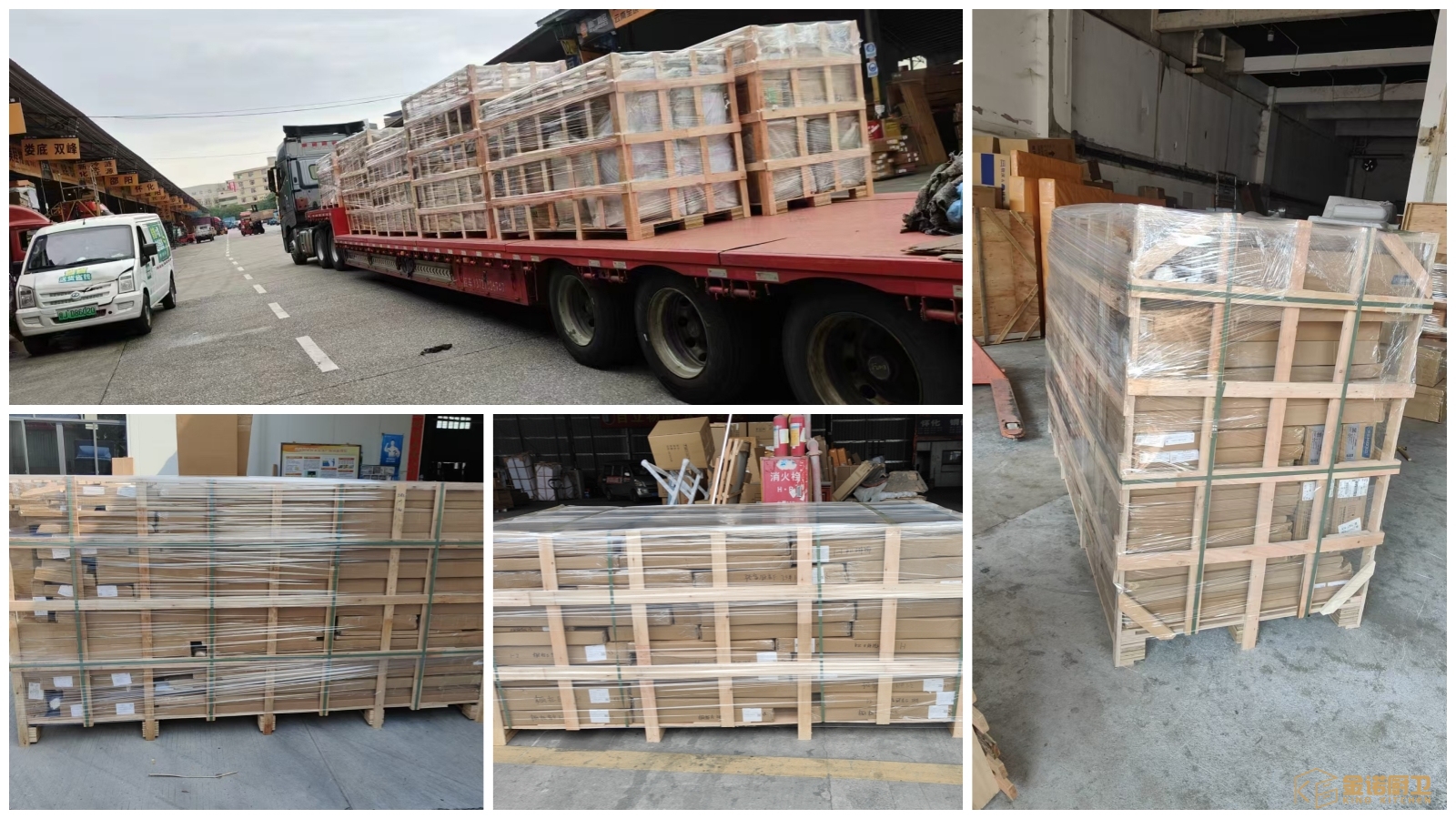
The most critical improvement was the introduction of full external wooden crates around packaged products.
This step fundamentally changed how Kino products respond to transportation stress.
The wooden crate functions as
• A load bearing structure
• A buffer against impact
• A stacking stabilizer
• A protective frame against puncture or crushing
Instead of allowing force to reach the product directly, the wooden structure absorbs and distributes stress across the frame.
In practical terms, this means
• Forklift contact does not reach the cabinet
• Sudden drops affect the crate, not the product
• Pressure from other cargo is resisted structurally
This is the packaging method Kino now actively recommends and applies, especially for international shipments.
Why Wooden Crating Matters for Stainless Steel Kitchens
Some clients assume stainless steel is indestructible.
This is a misconception.
While stainless steel is highly durable in use, precision fabricated components, welded seams, and finished surfaces can still be damaged by concentrated force.
Wooden crating addresses risks that cardboard or foam alone cannot.
Key benefits include
• Protection of corners and edges
• Prevention of bending from uneven loads
• Resistance to long duration vibration
• Structural integrity during stacking
For long sea freight routes and multi-stage logistics, this layer is not optional. It is essential.
Transparency Builds Trust
Publishing damaged shipment photos is not comfortable. Many brands avoid doing so to protect their image.
Kino chooses a different approach.
We believe transparency builds stronger trust than perfection claims.
By openly acknowledging where packaging failed in the past, we demonstrate
• Accountability
• Willingness to improve
• Respect for clients’ real concerns
• Commitment to long term reliability
This honesty is part of how Kino works with architects, distributors, and project clients globally.
Packaging as Part of Product Value
A kitchen system is not just steel panels and hardware. It is
• Design intent
• Manufacturing precision
• Logistics execution
• Installation success
If any one of these fails, the entire value chain is affected.
Proper packaging protects
• Installation schedules
• Project budgets
• Client confidence
• Brand reputation
From the client’s perspective, packaging quality reflects how seriously a manufacturer treats their investment.
What Clients Can Expect From Kino Today
Today, when clients work with Kino, they can expect
• Packaging recommendations based on destination and transport method
• Full external wooden crating for international shipments
• Clear communication about logistics risks
• Willingness to adjust packaging based on project needs
We do not promise that logistics will always be gentle. We promise that our packaging is designed for the opposite.
A Long Term Commitment, Not a One Time Fix
Improving packaging is not a one time correction. It is an ongoing process.
As shipping routes, regulations, and logistics methods evolve, Kino continues to review and refine packaging details.
Every shipment is feedback.
Every project is data.
This mindset ensures that Kino’s packaging standards evolve alongside global trade realities.
Conclusion
Responsibility Travels With the Product
A stainless steel kitchen is a long term investment. Clients trust manufacturers not only with design and production, but also with safe delivery.
Kino’s approach to packaging reflects a simple principle
Responsibility does not end at the factory gate
By learning from past mistakes, accepting responsibility without excuses, and upgrading packaging systems with real engineering logic, Kino reinforces its commitment to quality in every stage of the project.
This is not about avoiding damage.
It is about respecting trust.
And that trust begins with how the product is protected, from our factory to your site.

.png)
.png)
.png)


