In modern custom cabinetry manufacturing, delivering a product is never the end of the story. It is only one part of a much longer journey that includes design, production, logistics, installation, and after-sales support. For international projects, especially those involving overseas shipping, every detail matters—and every issue must be addressed with responsibility, transparency, and accountability.
This is a real case from one of our Philippines projects with a client named Yogi, which clearly reflects how we approach after-sales service in real situations.
A Missing Component That Shouldn’t Have Been Missing
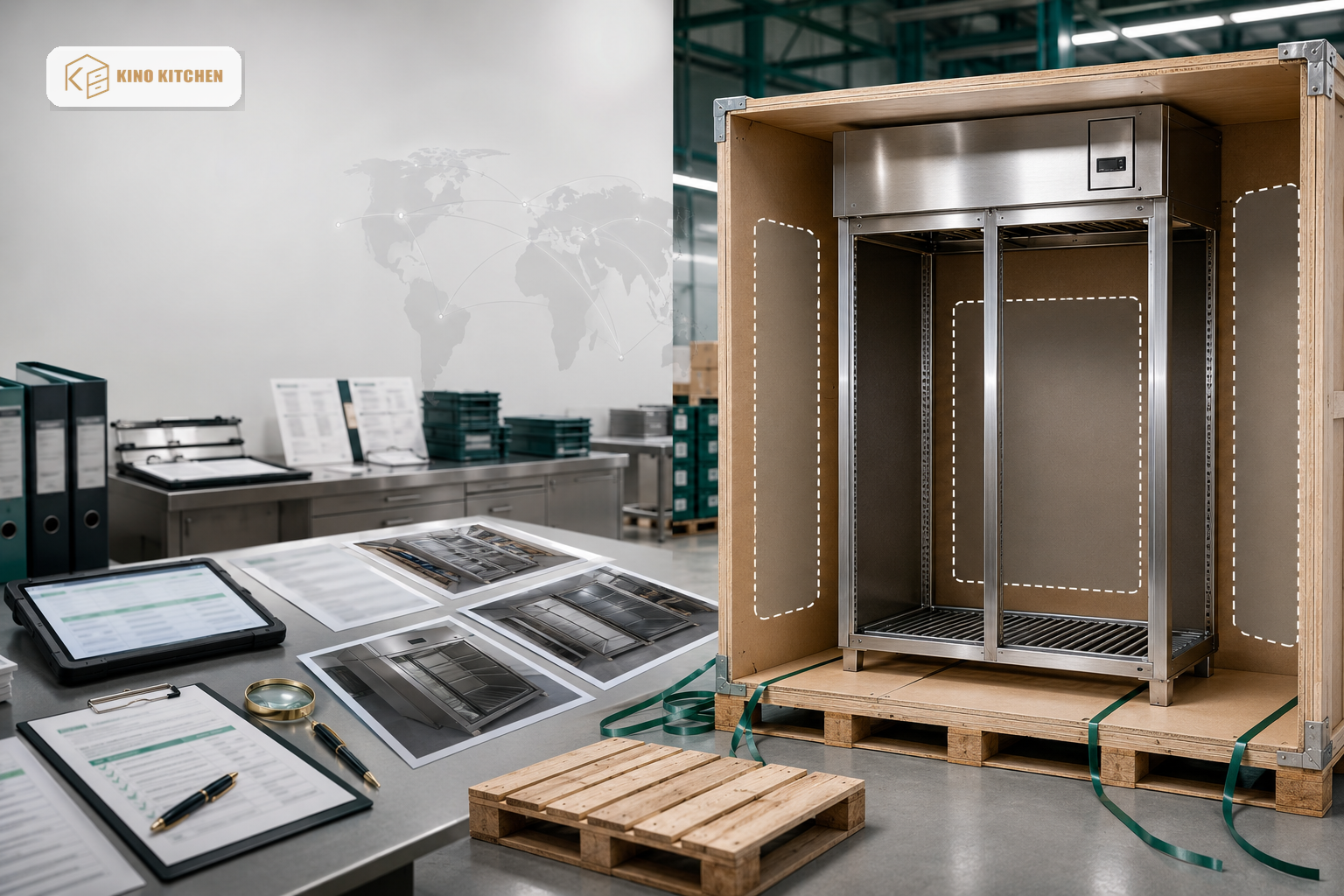
After the delivery of a refrigerator cabinet unit, the client reported that several structural components were missing: the back panel and two side panels of the refrigerator cabinet. Naturally, this raised concerns and required immediate investigation.
From our internal production system, however, the situation appeared confusing. According to our records, these panels were fully produced. We had:
Everything indicated that the components had been manufactured and properly stored. Yet, physically, they were not present in the delivered package.
This kind of inconsistency is exactly what makes after-sales cases complex in cross-border logistics: production reality and delivery reality do not always align perfectly.
Our Response: No Delay, No Debate, Immediate Resolution
Even though internal documentation confirmed that the missing parts had been produced, we did not shift responsibility or delay action.
Instead, we followed one principle: ensure the client’s project continues without disruption.
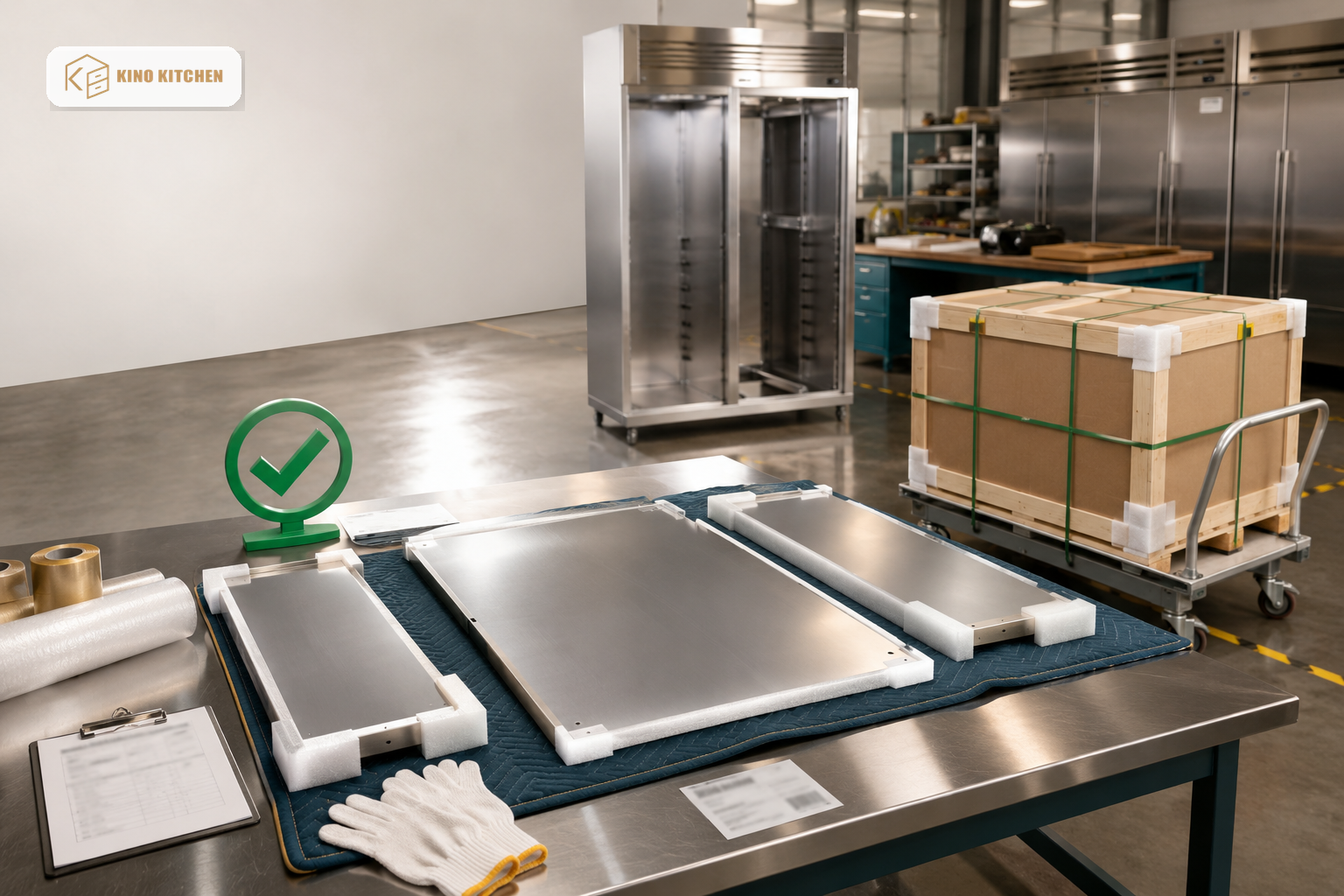
We immediately arranged to re-produce and re-send all missing components at no cost to the client. The replacement included:
The decision was made not based on “who is right,” but on one simple priority: the client must be able to complete installation smoothly and on time.
A Separate Issue: Quartz Countertop Finishing Detail
During installation, the client also reported a minor issue with the quartz countertop. One section of the surface had a slightly uneven polishing finish.
It is important to clarify that:
Structurally, the countertop was fully compliant
The issue was purely a minor surface finishing inconsistency
Visually, it is almost unnoticeable under normal usage
The texture difference can only be felt slightly by touch in one area
Although this was not a functional defect, we still treated it seriously.
We understand that in high-end cabinetry, even small tactile imperfections can affect user perception of quality. Therefore, we provided a compensation of 1700 RMB to the client as a goodwill resolution.
Why We Still Took Responsibility
In this case, we had production evidence. We had warehouse records. We had assembly proof.
But in real-world international delivery systems, documentation alone does not solve the client’s problem.
What matters more is:
The client’s installation progress
The overall user experience
The final project outcome
Long-term trust in the partnership
Even when data shows everything is correct internally, the customer’s reality comes first.
End-to-End Service Is Not a Slogan
Many suppliers describe themselves as “end-to-end service providers.” In practice, however, this often ends at shipping.
Our approach is different. We manage the full lifecycle of every project:
Client inquiry and requirement analysis
Custom design and technical confirmation
Manufacturing and quality control
Packaging and logistics coordination
Overseas delivery and installation support
After-sales issue handling when needed
This means we remain responsible even after the goods arrive at the client’s site.

What This Case Really Shows
This Philippines project is not an isolated incident. It reflects a broader reality in international manufacturing:
Complex logistics can create unexpected gaps
Documentation does not always match physical delivery perfectly
Small finishing issues can still matter in premium projects
Trust is built not when everything is perfect, but when problems are handled properly
In this case, we chose responsibility over argument, and resolution over explanation.
Final Thoughts
In the cabinetry industry, quality is not only about materials, structure, or design. It is also about how a supplier behaves when something goes wrong.
For us, every project is a commitment from start to finish. Whether it is a missing component caused by logistics, or a minor finishing imperfection in production, our principle remains the same:
Do not leave the client to solve the problem alone. Solve it with them.
Because in the end, what defines a manufacturer is not perfection—but accountability.




.png)
.png)
.png)
